Review: Santos & Co, Dorchester

Santos and co

Santos and co

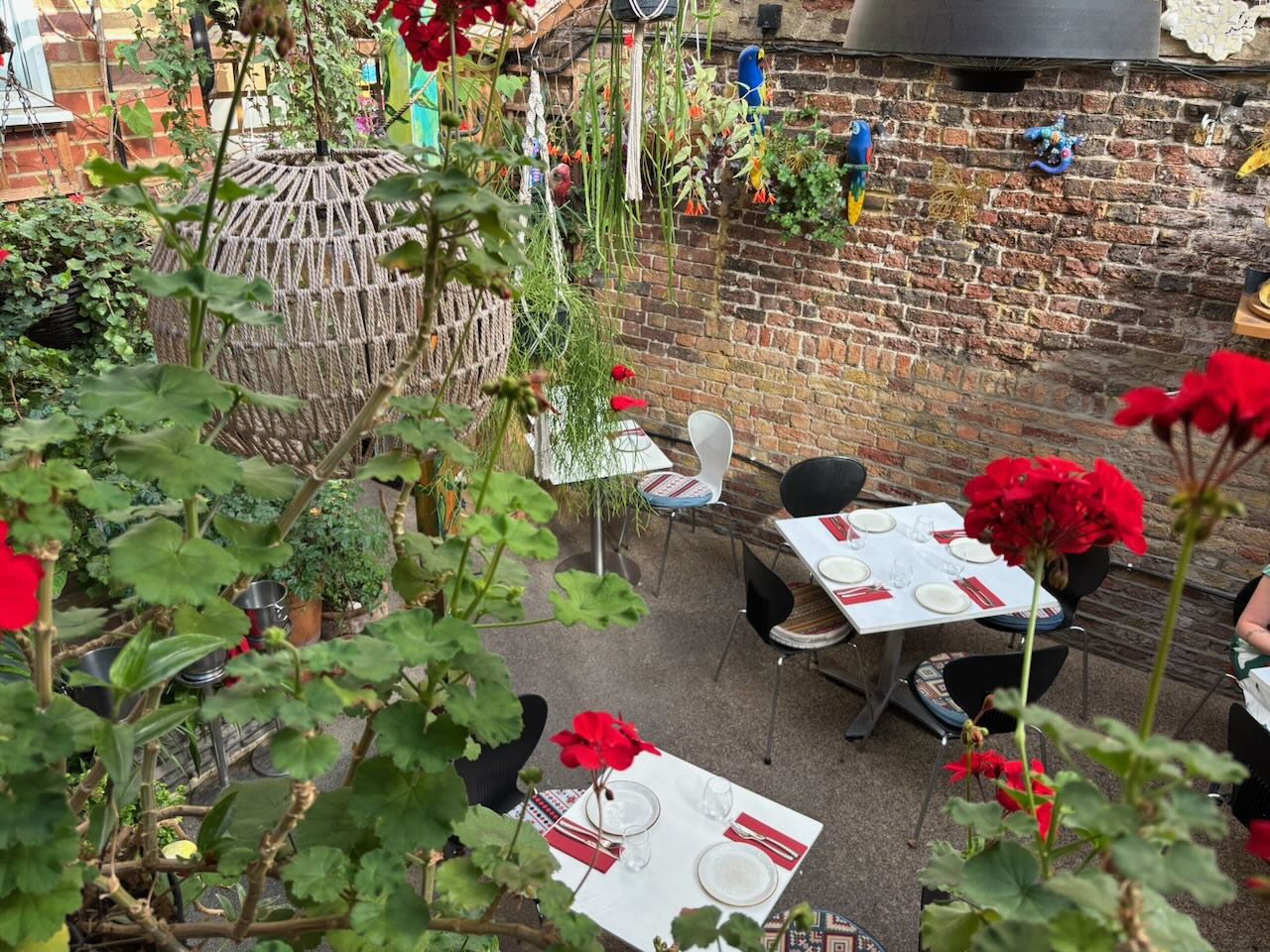
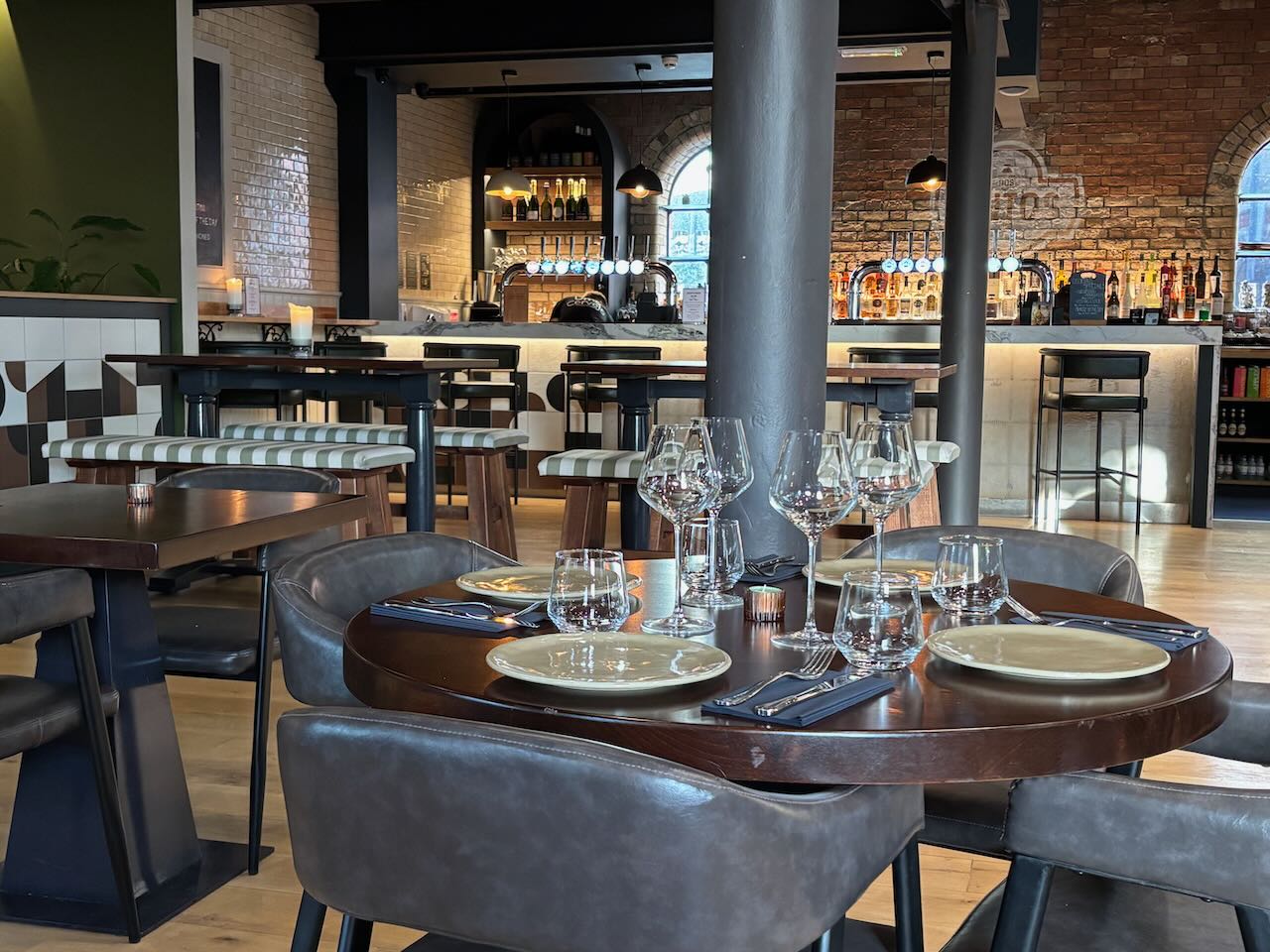
It seems an unlikely place to find an independent Portuguese restaurant linked to a farm and wine estate in Portugal: inside a modern leisure quarter rubbing shoulders with Zizzi, Cote, Pizza Express and the Odeon. But that’s where Santos & Co live, in Dorchester’s rather pleasant Brewery Quarter. It’s a big dining room and gives off friendly chain-restaurant vibes; I’m reminded of Asador 44 in Cardiff.

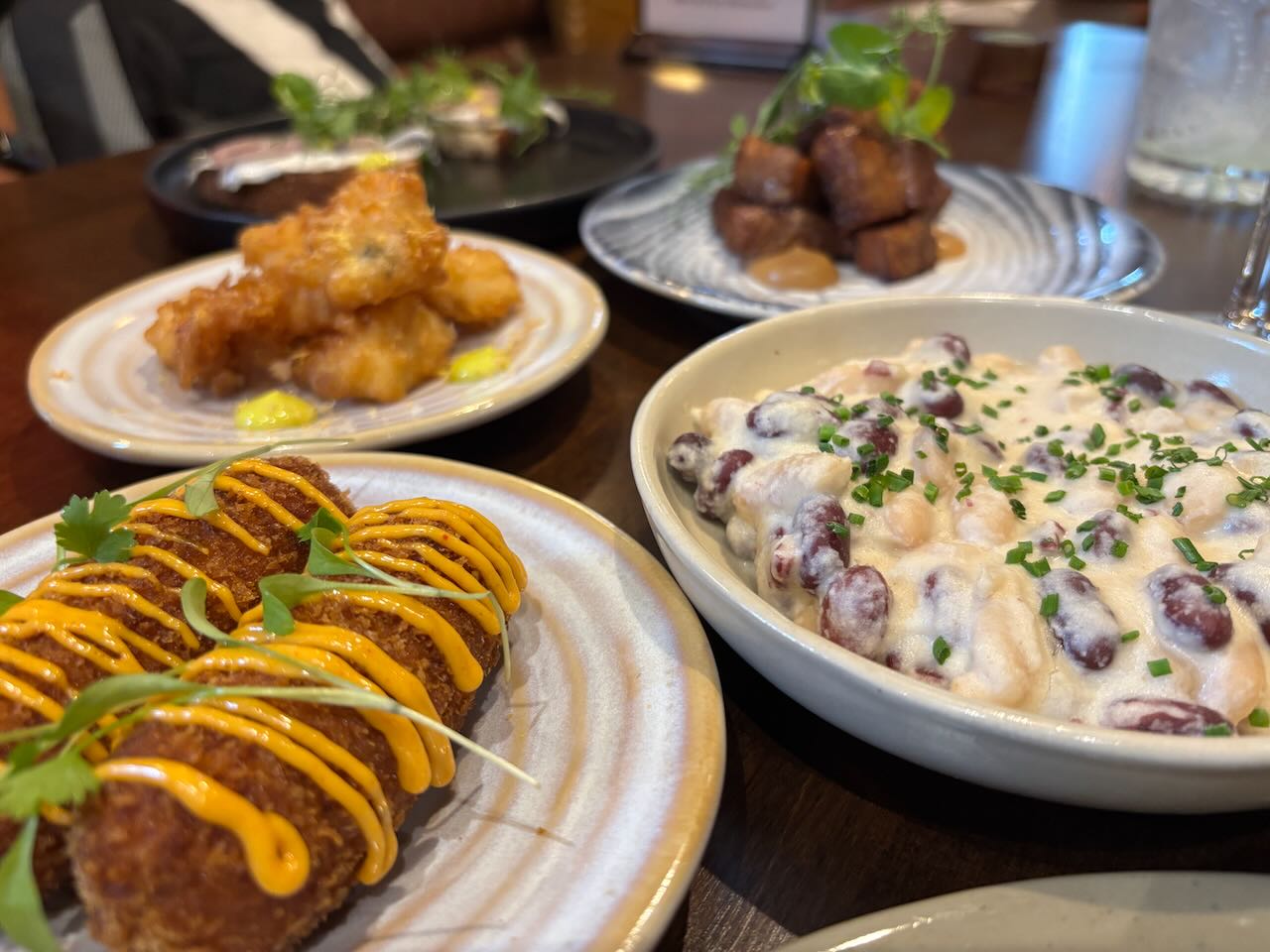
They’ve got starters and mains, but we went with a tapas vibe and got a few smaller plates to share. Briny anchovies on toast with blobs of friendly mustard were good little snacks. The crisply battered bites of salt cod came with the same mustard, each one a good little crunch full of toothy, salty fish. There was a plate of beans on ajo blanco, which I’d expected cold but was served hot. Then again, the nice garlicky-almond hum was still there, albeit the dish became a little hefty after a few bites. Better cold. Pork belly cubes were well grilled, the fat and meat working nicely together, though perhaps a little drier than they could have been. The tangy apple puree helped. Two pretty croquettes were expertly fried, the breadcrumb nicely crisp and not oily, the filling of shredded chicken and chorizo quite flavourful. And we also had a side of patatas bravas; nicely waxy potatoes, cooked and crushed skin-on, with a tomatoey bravas sauce that was tasty but could have used a kick of chilli.

You can make a tapas dinner here easily for £25 each, or a starter and main won’t be much more than that. They’ve got some good Portuguese wine, if the glass I had from their own estate is anything to go by. The food is decent, tasty but not brilliant. Still a whole class above the various chain restaurants surrounding them, so if you find yourself in Dorchester’s Brewery Quarter this might be my pick.

Tapas

Tapas

Review: Impala, Soho

Impala

Impala

Impala is dark, modern, sharp-yet-relaxed and loudly buzzing. Proper shout-across-the-table to be heard kind of buzzing. So I’d suggest you only go when you’re in that kinda mood. If you do, you’ll be very happy because the food is splendid. The menu is definitely meant for sharing, and you’ll need to trust the staff to guide you because (at least on a first visit) it’s impossible to judge which dishes will be large, middling or little.

Their thing is to be a “Mediterranean” restaurant, but if you’re thinking a bit Italian, a bit Greek, a bit Cote d’Azure then it’s worth remembering that the Mediterranean is bordered by the Middle East, the Balkans, Iberia and North Africa, and scattered with islands like Cyprus, Malta and Sardinia. Impala seems keen to dip its toes into all these waters, though primarily focused on Egypt and North Africa – homeland of the head chef.

Crab kibbeh

Crab kibbeh

We start with a sort-of kibbeh of white crab and cracked wheat bound by a spicy sauce and served wrapped in a big shiso leaf. This was bright, bold and very moreish. From then on dishes kept coming apace until our table was full and we just settled to browse on them to our fancy. A triangle of firm, white goat cheese accompanied by a candied green fig was equally moreish, the sturdy cheese simply being a nice clean foil for the gloriously sweet fig flavour. There was a Maltese fried bread called “ftira” covered in a bright herb salad and sauce with a soft fried egg beneath, the crisp outer and puffy almost doughnut inner of the bread went soooo well with the fragrant leaves and egg. Their bread game here was really excellent, in fact, with a rich honey-glazed brioche made with olive oil instead of butter and a blackened wholewheat Egyptian bread served with punchy harissa oil.

Tomato salad, usually a gentle side, was full-powered with pickled little peppers and a great pile of fragrant basil, oregano and other pungent leaves. From the more meaty section we enjoyed gently grilled sweetbreads in a sticky glaze

Ftira

Ftira

with a pile of wafer-thin sliced onions alongside, salted to draw out the sharpness. The sweetbread among the best I’ve ever had, particularly down to the sweet tang given by the glaze. Molokhia is a dark north African stew/sauce made of jute leaves, served here on two lovely chunks of slooooow cooked mutton (or “cull yaw” as we’re now calling it, presumably because “mutton” don’t sell!). The earthy herb flavour of the sauce wasn’t exactly summery but did go very well with the full-flavoured meat. Off the grill a sheftalia – a kofte-like sausage wrapped in caul – was delicious and disappeared very quickly.

This all sounds a lot, but between four it was fine and we had room for the single dessert on the menu: a date and pistachio tart. The dates form a sweet, rich base for a beautifully light custard on top, covered with a layer of pistachio crumb. The whole thing is encased in the most delicate and nutty pastry. It is simply heavenly with a glass of sweet wine, I can attest. Their wine list is long and interesting, more than I was expecting, and we found good bottles at decent prices. You’ll spend £40-ish per person on food (you can easily go higher with the special mains, or lower by keeping away from them, and still have a delicious meal). I rate Impala very highly, would go back in a heartbeat, albeit not when I’m after some peace and quiet.

Dart and pistachio tart

Dart and pistachio tart

Review: Crab House Cafe, Weymouth

Crab House Cafe

Crab House Cafe

I love going to the coast. One of the main reasons I love it is the explosion of shabby-chic seaside shack restaurants that serve up smashing fresh seafood hauled out of the sea nearby. I don’t know who exactly started it and where, but we’ve found them from Pembrokeshire to Kent, Northumberland to Devon and everywhere in between. There’s some really good ones in Dorset and the Crab House Cafe is another top specimen.

What they all have in common is an utterly laid-back, just-spent-the-day-on-the-beach-now-I’m-hungry air, and a love of local seafood at really good prices. The Crab House Cafe is tucked into an odd little spot on the edge of Chesil Beach, which really does look like it would have just been waste ground and/or a dusty car park if it hadn’t been turned into a nice place for a fish supper. Eating in the shaded pavilion was ace on a day that hit 30+ degrees, but there’s indoors and fully outdoors too.

Shellfish bisque

Shellfish bisque

Because their speciality are the Portland crabs fished within spitting distance of the restaurant, we opted for a bowl of crab bisque to begin. This was gloriously good, distinctly crab and deeply flavoured, but also bright and fragrant with some citrus and a drizzle of fennel oil. Nice saffron aioli too. For a main course Maureen went with huss kebabs, huss being an underused fish that is maybe somewhere between cod and monkfish in texture. It took on the tandoori marinade very well indeed and had been delicately grilled, still soft and translucent to eat. The hummus, giant couscous and bean accompaniment was just a teensy bit much carbs, but all tasty. My main was coley fillet, another underused fish that is perhaps like slightly robust haddock, and mine was cooked perfectly too. I’ve a real bugbear about overcooked fish, so if you like your fish dry and very white inside you shouldn’t take my recommendations. This was the opposite, soft and slightly slippery and just a bit translucent. The pesto and toasted almond flakes accompanied well, as did the mixture of roast Mediterranean veg underneath and the lightly truffle-oiled mushrooms on the side.

Great seafood, maybe about £40 for two courses – so not the cheapest seaside shack, but the quality was great and they’ve got a good drinks list of chilled wines, spritzes and cocktails to swig with it. Worth knowing.

Huss skewers

Huss skewers

Review: The Water House Project, Bethnal Green

The Water House Project

The Water House Project

They do a good thing at The Water House Project, a small touch but it feels generous and indulgent; with each of the wine pairings, they come along after and ask if you’d like a little more of the wine. Don’t mind if I do! Although, of course, it’s daft to overdo it on the wine pairing when the food is (almost) all of the finest.

Having said that, we actually chose the “mixed pairing” which means half the drinks are some well-chosen wines, the other half are interesting botanical drinks that they’ve built from ferments and shrubs to try and capture the same character as some of the wines, but in a non-alcoholic form. These were very good, especially a darkly oak-smoked drink reminiscent of a peaty whiskey, although typically they all tasted a bit sweet and less refreshing than the wine alternative.

Coral custard

Coral custard

The dining room at the WHP is lovely, a beautifully airy space with handsomely smooth wooden furniture and a mixture of rustic and industrial decor. It feels strangely out of place when you discover it after winding your way through the unrefined back streets of Bethnal Green. Service was friendly and professional, and they spend a good bit of time introducing their dishes, drinks and ideas.

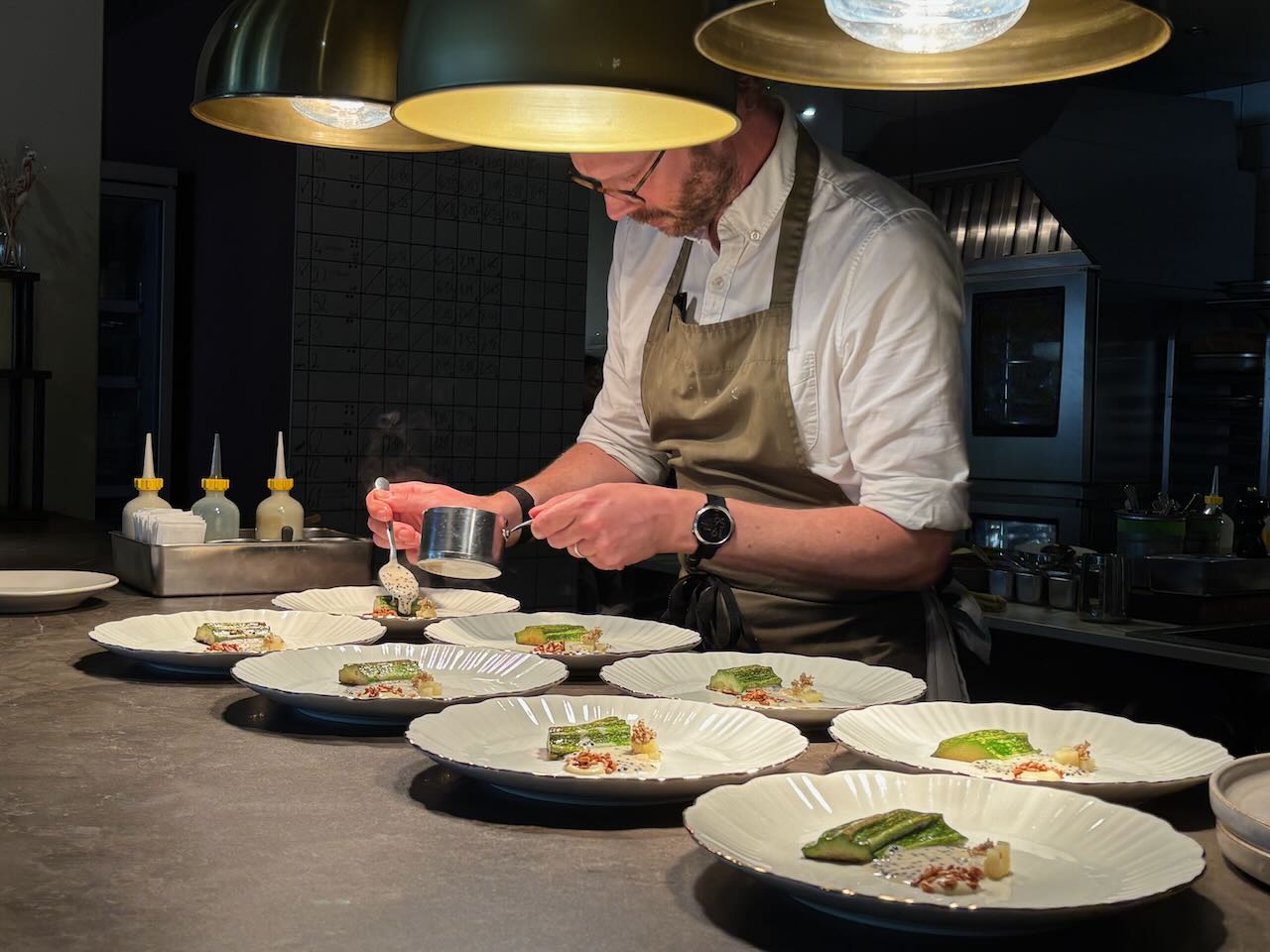
The snacks to start included a wonderful sweet tomato broth with fresh peas, nicely glazed slivers of onion and lardo on a little brown crumpet that was a bit too worthy, and a nifty tartlet of skilfully cured trout diced with beetroot and humming with coal oil. There were some lovely starters: diced oyster and cucumber with a bright sorrel granita on top and herb oil to drizzle over. Dreamily creamy custard of scallop corals, covered in a disc of sweet magnolia jelly and topped with brown crab “caviar” pearls. This was a stand-out little dish. Then again, so was the deeply caramelised scallop that came next, served on little ribbons of celeriac also caramelised gently down until they tasted more like little strips of toffee apple.

Smoked haddock porridge

Smoked haddock porridge

One dish did miss the mark. The “cullen skink” of pearl barley, mussels and smoked haddock was overwhelmed by a sauce containing a huge whack of Laphroaig whisky. It’s the peatiest of whiskies and I use it carefully even in bold cocktails, here it was just too much. Pity, as I liked the dish and the smoked haddock slices were beautiful.

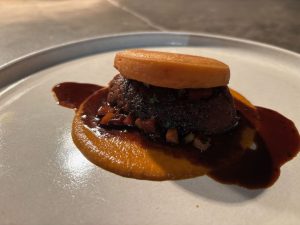
The main of hogget was back to excellence and balance, served with an interesting dollop of “black pudding” made with mushrooms, kojis and other non-meat cleverness. Nice piece of hogget, the fatty edge nicely browned and packed with all the flavour. Previously a remove of hogget sausage with leftover bread dumplings in a root veg broth was pleasant but missing something to lift the earthy flavours.

Dessert

Dessert

Feeling stuffed by now, we still loved the dessert, a neat disc of a very beautiful caramelised cream, silky with a texture like a good creme brulee but with a cleaner and richer flavour. Pear dice and pine nuts made for an unusual and delicious pairing underneath. The petit four was a “singing hinnie” which is like a tiny currant-filled welshcake, dotted with lavender flowers and served with cream whipped up with that potent hum of Laphroaig again. Less overwhelming in this context!

At £125 this is a strong tasting menu, with a real sense of its own character. I particularly enjoyed the non-alcoholic pairings, although that said I’m pleased we mixed some wine in. I’d definitely recommend an outing to Bethnal Green and dinner at The Water House Project.

Bethnal Green

Bethnal Green

Review: Sentosa, Bermondsey

Spring rolls

Spring rolls

Way back in 2010, in the middle of our year-long trip around the world, we found ourselves in Singapore for three days. This was a wonderful city, both quite alien in many of it’s habits and customs, but also completely modern and comfortable to be in (okay, except sometimes for the heat on the street!). And one day we sat down to one of the most memorable means of our year-long trip: Singapore black pepper crab! Oh, it was amazing, such a relentlessly, nose-drippingly fiery pepper sauce and such a lot of crab to pick through. Big enough crab that the bits of meat were worthwhile even from the smaller claws.

So we were happy to find Sentosa, newly opened in Bermondsey and providing chilli and black pepper crab as their star menu items, alongside lots of other Singaporean/Malay favourites like laksa and char kuey teow. We’ll have to come back to try them, because today was black pepper crab day!

Roti canai

Roti canai

We did grab starters of crispy veg spring rolls and roti canai (oh, and I can recommend their iced Malay coffee). The spring rolls were moreish and crisp on the outside, very trad, just as I remember them. The roti was as perfectly crisp, flaky and chewy as any other specimen in London and the little bowl of potato curry was gently warm and fragrant, perfect for dipping in though I’d have preferred it a bit thicker. However, since the crab arrives 30 seconds after the starters arrived (why does this keep happening lately?!) the roti was also perfect for spare black pepper sauce!

And their midnight black pepper sauce was also tip-top and just as I remember: the first ferocious hit of pepper makes your nose run and leaves you wondering if you can keep going, then magically it all gets better after that, massively full-flavoured and punchy but very edible and terribly moreish. The sauce was puddled over a magnificent specimen of a crab, properly big enough for two to share, and they’d cracked each claw and leg in advance, the brown meat still clinging to the underside of the carapace. Nevertheless, it took us a solid hour to work our way through everything. Seriously. Whole crab isn’t something you can rush. And whole black-pepper crab is like no other whole crab dish.

Sentosa is a simple restaurant in the back of Bermondsey, it’s not fine dining nor designer-chic, but comfy and friendly. If you share a crab, you’ll end up around £35-40 each for food without drinks, maybe a bit more as even a big crab isn’t a massive meal. I can only have it occasionally – such a faff, but such tasty fun – so I’m actually more keen to hurry back and try some of the other Singaporean classics, which also look very keenly priced!

Black pepper crab

Black pepper crab